SCIENCE · EDUCATION · LIVED EXPERIENCE · PATIENT ADVOCACY
About The Connective Issues
A complicated health history deserves careful attention.
The Connective Issues brings scientific reasoning and patient experience together to help people make sense of symptoms, medical findings, and unanswered questions.
Founded by Jaime M. Prout, PhD, MB(ASCP), BCPA.
Why I built The Connective Issues
My scientific career has focused on how molecular changes affect the body and what laboratory testing can tell us about them. That work requires looking closely at how a result was produced, what it supports, and what might explain findings that don’t fit.
Applying those skills to my own and my family’s health meant considering clinical findings alongside experiences that weren’t always documented. A symptom’s timing, a response to treatment, or a detail from childhood could change which explanations were worth exploring.
While puzzling through the details, a few questions kept coming up:
What happened first?
Which findings might be related, and which might have separate causes?
What does the research support?
What findings challenge a possible explanation?
I founded The Connective Issues to help people use science to make sense of complex health questions. Through genetics education, research libraries, Phenotype Mapping, and consultation services in development, I want to help people explore possible biochemical explanations and prepare more focused questions for their healthcare teams.
Mission
Connect patient experience with science to make complex health questions easier to investigate.
Through accessible education, carefully evaluated research, and tools such as Phenotype Mapping, The Connective Issues helps people explore possible explanations, ask more focused questions, and work with their healthcare teams to investigate what comes next.
Vision
A future where patients’ experiences help advance the understanding and care of complex illness.
Where science and lived experience inform one another, and people have the knowledge and support to help shape the questions, research, and decisions that affect their health.
Jaime’s Journey
My dad was a commercial fishing captain, and I spent part of my childhood living aboard his boats. When I was about ten, he let me “help” him prepare for his celestial navigation endorsement exam, and that was when I first fell in love with science. Learning how patterns in the sky could help you find your way at sea fascinated me, and I quickly became obsessed with space.
In high school, Punnett squares turned my attention from space to genetics. Those little grids, used to show how traits pass from parents to children, sparked a new obsession. I was captivated by the idea that DNA could carry the information a living organism needs to develop and function, and that scientists were learning to read it. My curiosity moved from the universe around us to the biology within us.
Then, during my first semester of college, my dad died unexpectedly. No autopsy was performed, and the only explanation our family got was “heart attack.” Suddenly, the person who had sparked my curiosity and introduced me to a world of “what if” questions was gone, and we had so few answers about why.
I carried his influence through my education and into a career in molecular diagnostics, genomics research, and genetic medicines. I developed clinical tests, analyzed genetic data, and studied how changes in DNA could affect how the body works. I learned to look closely at how a result was produced and what the evidence was really telling us. Later, those skills became an indispensable tool in the search for answers to health problems in my own family.
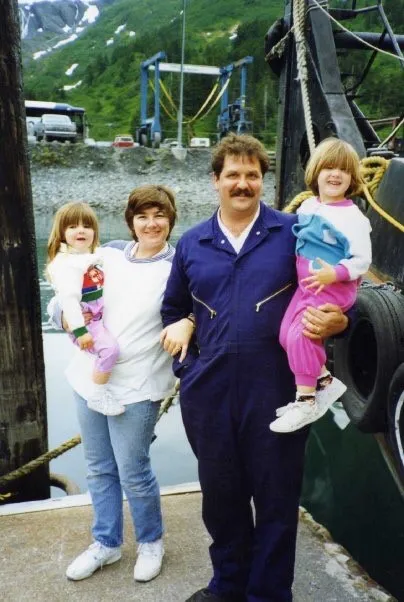
My Sister, Mom, Dad, and I in Alaska, circa 1992
Scientific Training
PhD-trained molecular and computational biologist focused on genetic diagnostics and molecular mechanisms of disease.
Clinical Laboratory Expertise
MB(ASCP), with experience executing, developing, and validating molecular diagnostic assays in regulated clinical laboratory environments.Rare Disease Research
Experience working in clinical-stage genetic medicine development programs to treat rare diseases at their genetic root.
Patient Advocacy
Board Certified Patient Advocate (BCPA), built from years of advocating for her own and her family's medical care.
Learning to put my own symptoms into words
For most of my life, I blamed my joint issues, clumsiness, pain, fatigue, and exercise intolerance on my weight. But after my youngest child was born and I finally lost the weight, my health only got worse. My knee had been dislocating since childhood, and a first cousin had recently been diagnosed with hypermobile Ehlers-Danlos syndrome (hEDS), a connective tissue condition. Yet an early rheumatology assessment called my hypermobility “benign” and sent me on my way.
As I reviewed my own and my family’s clinical histories, I noticed how much information had accumulated across years of appointments and specialties without being considered together. I also realized that I had lived with some of my symptoms for so long that I didn’t even recognize them as symptoms. Even with my scientific training, learning to explain them in context took an extraordinary amount of work.
I eventually found a physician who diagnosed hEDS and POTS. A neuropsychologist later diagnosed ADHD and autism, something I hadn’t considered for myself, even as I was seeking answers about those same conditions for my children. Each diagnosis gave me a new way to understand experiences I had lived with for years.
Then I started looking through my own genetic data to see what answers might lie there, and I found a DNA variant that potentially offers clues to my dad’s early death. The variant is on the X chromosome, which raises questions about what it might mean for my children, particularly my three boys. I still have a long way to go to establish whether the variant played a role in his death or has any consequences for my boys. I want to understand what happened to him, and to make sure my children have the information and support they may need.
I walked at my PhD graduation in Biochemistry and Molecular Biology in December 2023, with all four of my children there to see me graduate, along with my Mom, Sister, and Cousin. As I looked up at my kids and family cheering while I was being hooded, I mentally dedicated the moment to my dad, who first helped me discover a passion for asking the hard questions.
The Connective Issues grew directly from my life experience, and I’ve put my whole heart into it. It’s where I bring together my work as a scientist, my experience as a patient, and the questions I carry as a daughter and a mother. In 2025, as I went another year struggling to find a job in the crumbling biotech industry, I began turning the research and approaches I’d used for myself and my family into resources I hoped would help others navigate their own diagnostic odyssey more efficiently. Now, as I shift my focus from lab work to patient advocacy, my goal is to help people make sense of their own health information, understand the relevant science, and bring more informed questions to their care teams.
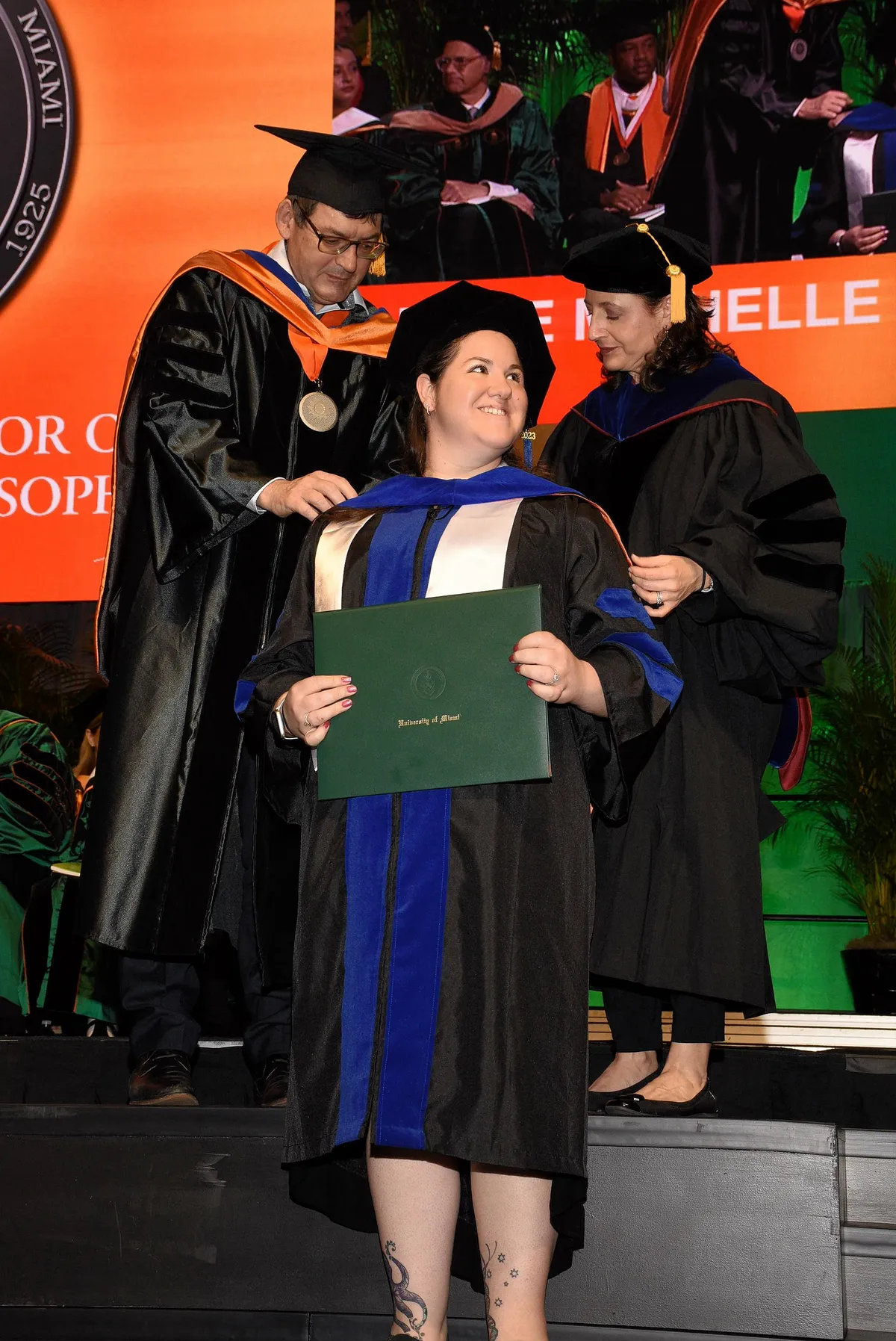
PhD graduation, December 2023, gazing at my family cheering me on.
Scientific Training
PhD-trained molecular and computational biologist focused on genetic diagnostics and molecular mechanisms of disease.
Clinical Laboratory Expertise
MB(ASCP), with experience executing, developing, and validating molecular diagnostic assays in regulated clinical laboratory environments.Rare Disease Research
Experience working in clinical-stage genetic medicine development programs to treat rare diseases at their genetic root.
Patient Advocacy
Board Certified Patient Advocate (BCPA), built from years of advocating for her own and her family's medical care.
How my background shapes the work
Four perspectives guide how I approach questions about symptoms, testing, and medical evidence. Together, they inform the Phenotype Mapping Method, from listening to your experiences and organizing clinical information to examining possible explanations and what the evidence may mean for you.
Scientific reasoning
My PhD is in Biochemistry and Molecular Biology, and my work has spanned genetic medicines and molecular diagnostics.
That training shapes the questions I ask about a possible explanation:
• How could it work biologically?
• What evidence supports it?
• What would challenge it?
Laboratory expertise
I’m a certified laboratory scientist in molecular biology through the American Society for Clinical Pathology, with experience in running, developing, and validating clinical diagnostic assays.
I bring that perspective to questions about testing:
• What does a test measure?
• How is a result produced?
• What can and can’t that result establish?
Patient advocacy
As a Board Certified Patient Advocate, I help people understand their own health information and prepare for more productive conversations with their healthcare teams. That includes clarifying unfamiliar terms, identifying questions that still need answers, and making sure their concerns and priorities are part of the discussion.
My philosophy is that understanding the research and evidence relevant to their symptoms helps people participate more effectively in decisions about their care.
Lived experience
My own and my family’s diagnostic journeys have shown me how much can be missed when symptoms are considered separately or childhood experiences never reach the medical record.
Those experiences shape what I listen for:
• When did something begin?
• How has it changed over time?
• What has the person living with it noticed?
Their account belongs alongside clinical findings and test results.
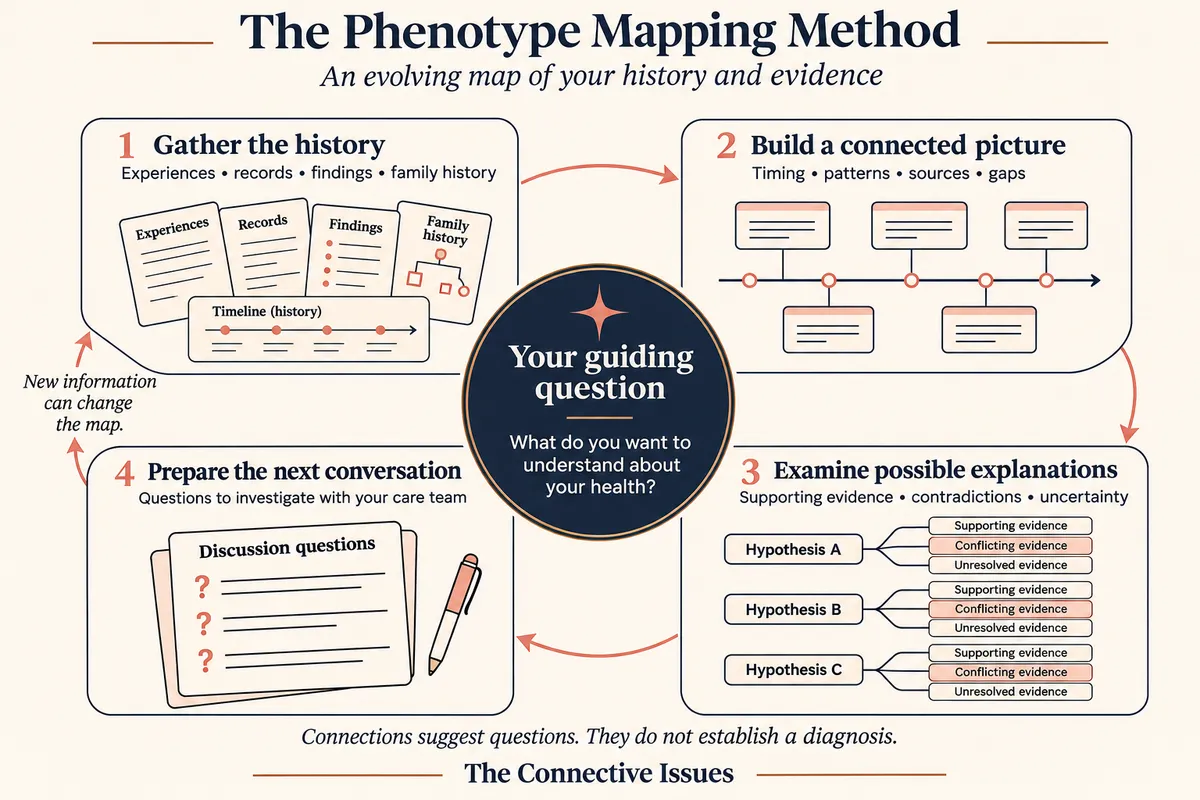
View the full-size method figure
Gather history: Experiences, records, findings, and family history.
Build a connected picture: Timing, patterns, sources, and gaps.
Examine possible explanations: Supporting evidence, contradictions, and uncertainty.
Prepare the next conversation: Questions to investigate with your care team.
New information can change the map. Connections suggest questions; they do not establish a diagnosis.
This describes the approach behind The Connective Issues. The scope of any individual consulting work has to be discussed separately; this page isn't an offer of a particular service or a promise of a diagnosis.
Keeping the evidence and its limits visible
A working hypothesis is a possible explanation we can examine. I distinguish established findings from early research and from ideas that still need testing, including where findings conflict or information is missing. A process observed in a laboratory study may help us frame a question without showing that the same process explains your symptoms. The aim is to make the reasoning clear enough to discuss with your care team, including what could change it.
I'm a scientist and patient advocate. Medical diagnosis and treatment belong with qualified healthcare professionals, and my work does not replace medical care or genetic counseling.
The diagnostic odyssey that built the method
Her husband's case came first. His clinical history was scattered across years of symptoms that no one could connect: lifelong fragrance allergies, food aversions, immune challenges, and progressive muscle weakness that doctors told him was impossible as described. He had a precise, explicit way of describing what he felt, and Jaime recognized that specificity as something she could work with. She started testing his descriptions against possible biological pathways. When she layered in lab values tracked across years and mapped his medication reactions against those pathways, the possibilities started narrowing. When they finally laid full genome sequencing on top and evaluated the model against all pathogenic and likely pathogenic variants, the whole thing snapped into focus. From that work, they got him to the right doctor and the right treatments.
Jaime's own health started shifting when she started having children. She'd always been heavy, and had always blamed the aches, the fatigue, the lack of energy on her weight. She used to joke that she was impressively flexible for a "fat chick," not yet understanding what that flexibility actually meant. After her last child, she lost all the weight, but instead of improving, everything got immensely worse. By the time she started suspecting something larger, her cousin had just concluded a multi-year diagnostic odyssey ending in an hEDS diagnosis. When Jaime researched it thoroughly, she recognized her own patterns immediately.
Her first rheumatologist dismissed her on the spot, assigning a "benign hypermobility" diagnosis. Her knee had been dislocating regularly since childhood. She'd already had her ACL replaced after it snapped from overextension, and she was on the verge of MPFL replacement surgery, with surgeons needing to pull fragments of patella and cartilage out of the knee socket in the process. "Benign" was not an acceptable answer. She later found an EDS-knowledgeable physician who diagnosed both hEDS and POTS. ADHD and autism diagnoses followed.
In mapping her own case the same way she'd mapped her husband's, one thing became obvious: all the clinical evidence had been there for years, scattered across portals and offices and specialty visits. Nobody had ever laid the data points side by side. Then she started thinking about her father. Sifting through her own genetics has given her new clues into why he died so early and so suddenly, and she's actively investigating that hypothesis, because the answer could have direct implications for her three young boys. There was no organized record of his health. There was no autopsy. Genetics brought him back to her in a way she didn't expect, and the recognition that organized evidence could have changed the trajectory of his care is one of the reasons this work feels urgent.
About Jaime Prout and The Connective Issues
I'm Jaime M. Prout, PhD, MB(ASCP), BCPA, founder of The Connective Issues. My background spans molecular genetics, bioinformatics, and clinical molecular diagnostics. My own diagnostic odyssey showed me how difficult it can be to connect symptoms and findings spread across years of records and appointments. That experience, alongside my scientific work, shaped the Phenotype Mapping approach.
How I approach a complex health question
I start by taking your symptoms and experiences seriously, including details that haven’t made it into your medical record. Together, we translate those experiences into medical language and organize them into a coherent phenotype: a detailed picture of your symptoms, history, and clinical findings. I connect that picture with relevant research and biochemical clues to help your care team see the whole picture, investigate possible explanations, and work toward a diagnosis.
In complex disease, the pattern is the data.
Medicine partitions what biology integrates.
Symptoms are downstream outputs.
The inconsistency is the pattern
Chronology is data
What You Can Expect From Me
Your Symptoms Are Real
If you have been told your physical symptoms are just stress or anxiety, I know what that feels like, and I know it is rarely the full picture. I will look at your data with the assumption that your symptoms have physical, biological roots. We follow the science, not the stigma.
Organized evidence, not opinions
The aim is to make your history and the evidence easier to examine with your care team, while keeping possible explanations and unresolved questions visible. A biological explanation remains something to investigate, test, and revise with qualified providers.
Scientist, not Physician
I do not diagnose, prescribe, or provide medical treatment. My training is in molecular biology.
I translate the science and organize the evidence so your clinical conversations are more productive. This work is designed to complement evaluation by a licensed physician or certified genetic counselor.
The Phenotype Mapping Method
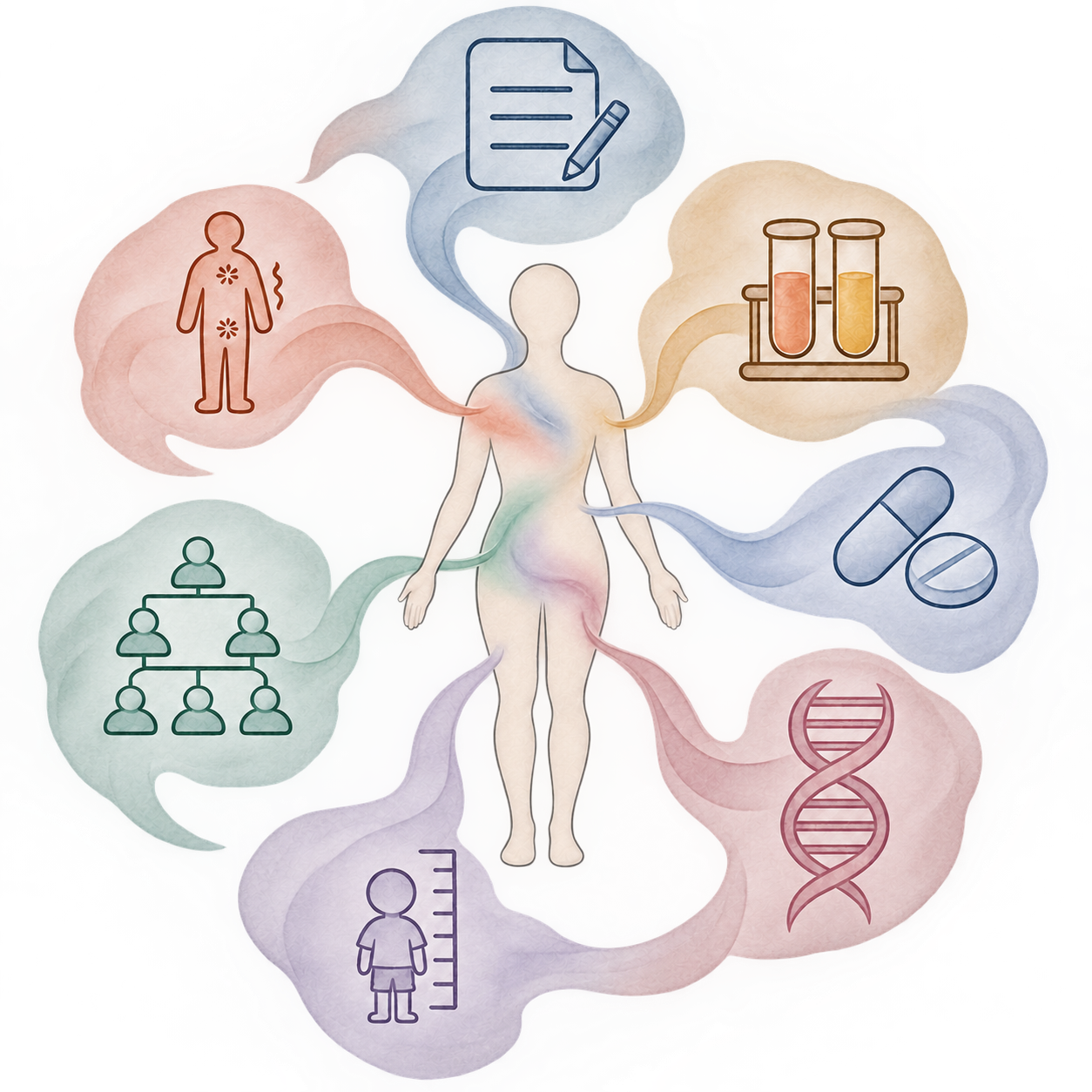
The Phenotype Mapping Method grew out of Jaime’s efforts to apply her scientific background to her own and her family’s complicated health histories.
In medicine, a phenotype is the collection of observable features that describes a person’s health. In genetics, those features are often recorded using Human Phenotype Ontology (HPO) terms: standardized names that help clinicians and analysis tools compare findings with known genetic conditions. That shared vocabulary is useful, but a list of terms alone is insufficient for understanding how a person’s health problems developed and what might connect them. Timing, triggers, treatment responses and experiences missing from medical records can change how a finding is interpreted.
Phenotype Mapping keeps that context alongside clinical findings, family history and genetic information, then uses research and knowledge of the body’s biochemical processes to develop possible explanations. These form a working biological model that can be examined against the whole history, including findings that challenge it and information that remains uncertain. The model can be revised as new evidence emerges, helping identify more focused questions for the healthcare team.
This is scientific education and evidence-focused support, not diagnosis, treatment, or formal genetic counseling.
Four phases of Phenotype Mapping
Define the Guiding Question
Start with what you’re trying to understand. A specific question gives the investigation direction without assuming the answer.
Build the clinical picture
Bring together symptoms, childhood health experiences, family history, medications, and clinical findings. Arrange them in a timeline, keeping track of what was documented, what you recall, and what is still unknown.
Investigate possible explanations
Compare the history with relevant research and genetic findings, where available. Consider how changes in the body’s chemical processes could contribute to the symptoms, how strong the supporting evidence is, and which findings challenge an explanation.
Prepare the next conversation
Return to the Guiding Question with an organized account of the evidence: what is clearer, what remains uncertain, and what would be useful to ask your healthcare team. Revisit the map when new information changes the picture.
Professional background
Education
PhD, Biochemistry and Molecular Biology — University of Miami
MEng, Bioinformatics — University of Illinois Chicago
BA, Biology — Boston University
Lab Scientist Certification — University of Connecticut
Certifications
MB(ASCP)
Board Certified Patient Advocate (BCPA)
Work Experience
Lab technologist in molecular diagnostic laboratories
Molecular diagnostics at Beckman Coulter
Genomics and gene-therapy research at Homology Medicines
Cancer pathology research at Brigham and Women’s Hospital
Volunteer Experience
Contributor to the ClinGen Lysosomal Diseases Variant Curation Expert Panel
Selected publications
ClinGen variant classification
Variant classification for mucopolysaccharidosis type I; ACMG/AMP specification for IDUA from the ClinGen lysosomal diseases variant curation expert panel
Lacaria M et al., including Prout J.
Molecular Genetics and Metabolism · 2026
Read on PubMed · Read the paper
Molecular assay development
LNA blockers for improved amplification selectivity
Prout J, Tian M, Palladino A, Wright J, Thompson JF.
Scientific Reports · 2023
Services and inquiries
For a general question or collaboration inquiry, email [email protected]. Please keep your message general and don't include medical records or detailed health information.
For consulting inquiries, start with the Diagnostic Strategy Interest Form. Consultations aren't open for scheduling yet; the form does not book an appointment or confirm a place. Keep your response general and don't send records or genetic data through the interest form.
Professional Experience & Publications


Resources
Reference Library
Research Breakdown Library
View our Privacy Policy and Terms and Conditions here.
© The Connective Issues 2026. All Rights Reserved.
Facebook